Tuesday, February 20, 2024

AI for Summarizing and Transcribing Documents

I listened to the Legacy Webinar, "AI and Genealogy: Trouble Ahead?", presented by Thomas MacEntee. He discussed using AI to summarize and transcribe documents. I tried this out, and it's really a great time saver! 
 
One of my grandmother's, Graciela del Castillo, was Nicaraguan. There isn't much published about Nicaraguan genealogy, and what's available. I was in contact with a Nicaraguan genealogy expert back in 2015. I've been going through his emails again as I work on my grandmother's line. He sent me a dozen emails with detailed information regarding Nicaraguan research. I was planning on summarizing the information and sharing it with a group I'm involved in. After listening to the webinar I decided to use AI to do it. Thomas MacEntee demonstrated three AI sites ChatGPT, Perplexity, and Gemini. I tried out all three sites. I love information presented in bulleted lists, and asked that the emails be summarized that way. 

 Here is one of the emails I asked for a bullet list summary for:


Here is what the three AI companies came up with: 


Perplexity came up with the most detailed summary. ChatGPT was in-between as far as details. Gemini provided the shortest summary. I like that Gemini provided an introduction in bold script (also liked being able to save the answers to my Google Docs). 

I decided to ask Perplexity and ChatGPT to provide a bold introduction to each bullet point. 

This is what Perplexity came up with:


This is what ChatGPT came up with:


ChatGPT didn't provide an introduction for each bullet point, as I asked. I like what they came up with anyway. Perplexity did exactly what I asked. 

I was about to get a pen and paper ready to start summarizing these emails. I'm glad I listened to the webinar first! I'm sure these summaries are better than what I would have come up with. 


Tuesday, February 13, 2024

A Couple Family Valentines


The only photo I have of my parents when they were dating in 1962

Going through old boxes I found some old Valentines.

This one below was from my father, Bob, to my mother, Edna, when they were dating in 1962. The front is made of padded cloth. The verse is very romantic! 


Another family Valentine I found has velvet on the front. Probably 50 some years old? 


Happy Valentines Day!

Thursday, February 8, 2024

Automating the Genealogy Process to Save Time

Unless you enjoy spending long hours in front of a screen, automating genealogy tasks can free you from long hours analyzing DNA results, writing reports, and looking through your work for errors. There are people who work 40 hours, and more, a week who would benefit from more genealogy task automation. 

I really got to thinking about time saving tools after listening to a couple of great webinars at Legacy Webinars. "Explore Uncharted Paths in Tracing Brick Wall Ancestors Through DNA Network Graphs" and "Artificial Intelligence and Genealogy: New Beginnings in 2024" provide examples regarding how automation can save time. 

Analyzing DNA results is very time consuming due to the number of matches most of us have. Going through matches searching for shared matches is the best way to determine how we are related to someone. One method at AncestryDNA is using colored dots to sort matches into groups based on shared matching. It's easy to pick a match, click on them, and see which matches are shared in common and place color coded dots by their names. There might be a dozen shared matches. You can then click on these dozen shared matches individually and see matches you share with them. As you work through matches, and shared matches of matches, and their shared matches this gets very time consuming. Automating this process would save time. The companies could run a program to place color coded dots for shared matches or provide us with cluster charts. 


MyHeritage allows their customers to generate cluster charts from their shared matches.Their charts are quite simple, but helpful. Even more detailed charts could be produced by companies. If you watch the webinar about graphs you can see all of the possibilities. 

Family Tree software, such as RootsMagic, produce barebones narratives using our family tree details. AI sites like chatGPT can produce more polished readable narratives based on the narratives produced using your family tree software. You need to suggest a style to chatGPT to get an end product you like. Even then you may want to edit the wording, but it's still time saving. The more readable narratives can help you find errors and make details pop out you might have missed. Producing some of these narratives I found I had information in my tree I now disagreed with. 

I liked how this narrative about my del Castillo family came out using my RootsMagic information and chatGPT here's a sample:

"Through the centuries, through wars and revolutions, through migrations and milestones, the del Castillo family remained bound by a thread of shared history and shared destiny. Their story, etched in the annals of time, stands as a testament to the enduring power of family, love, and the human spirit."

I thought that was actually appropriate for this family. Sounds a little grandiose but the family was involved in the politics of Nicaragua, one ancestor serving as president during a civil war. 

This Moses Wray example is a little flowery for my taste, but the fact he died at age 75 jumped out at me more than it would in a barebones narrative:

"By 1786, Moses Wray's name echoed through the valleys of Franklin County, Virginia, marking his claim once more. But the winds of time whispered a somber tune, and Moses passed on before the autumn leaves could paint the hills in shades of gold. He took his final breath before the 4th of October 1802, at the age of 75, leaving behind a legacy woven into the very fabric of Bedford and Franklin County."

Ancestry is offering DNA customers an AI feature which they can use to get more information about their ethnicity predictions. It provides some background on the culture and region  someone is predicted to have ancestors from. 


An important use of AI is for OCR, which allows for faster indexing of records. Language translation is another very useful feature. 

I see a lot of uses for graphs and AI in helping to save time on tasks I'm not that interested in spending time on. Writing research plans, narratives, and other reports would be a good use of AI technology. I hope companies will see the advantages of new technologies and offer them to their customers. There are tools we can use right now ourselves, but other tools would have to be produced by DNA companies since we don't have access to the information to produce our own graphs of shared matches, for instance.
 

Monday, January 8, 2024

Examining Middle Names for Clues


 Early on in my genealogy research I discovered a middle name could be a mother's maiden name. My great-grandfather William Wray Forgey's middle name was his mother Elizabeth's maiden name. His aunt Polly Thurman Wray was given her paternal grandmother's maiden name as her middle name. After these early discoveries I looked at middle names very carefully for clues to their origins. 

William Wray Forgey's maternal grandmother Sarah Campbell-Wray's family is a brickwall for me. We don't know who her parents were? She was born about 1812, possibly in Tennessee.  According to some posted family trees her full name was Sarah Cloud O'Briant Campbell. I've been looking at these middle names to see if they might provide clues? I've looked for those names in the area of Indiana she married and lived in. Those names haven't pointed to any solution to who her parents, or even siblings were. I haven't even found the source of those middle names. 

Sarah's daughters' middle names appear in a family bible and other documents. Polly Thurman Wray is confirmed to have her maternal grandmother's maiden name, but her other daughters' middle names are a mystery. One daughter was given the middle name Temple and another daughter Willington. I haven't been able to connect any of these names with my Indiana family. A son was given the name Harrison as a middle name, and that surname belonged to an uncle through marriage, on the Wray side. 


My ancestor Elizabeth Wray's middle name was Jane. Often family first names are recycled as middle names. Jane could have been a relative of Sarah Campbell? 

Researching deeds I found a James Trigg Campbell. He appears to have a relationship with the Wray family living near them, and trading land with the family. James Campbell isn't an uncommon name, but I felt like the middle name Trigg could point me in the right direction, as middle names had in my past research. Sadly, no.

When I visited a Lynchburg cemetery during the summer I noticed a tombstone with the middle name Trigg on it. Possibly Trigg was a middle name used in the past without any significance? 


I visited the historic house Sandusky in Lynchburg, Virginia which was once owned by an Otey family. That name was used as a middle name by some of our Wray distant cousins. I told the historian at the house my relatives used Otey as a middle name and wondered if they were related? He said sometimes middle names were just names of neighbors. Middle names could be a clue to where the family lived, but may be the name of a relative.


Middle names are sometimes added to ancestors' names by people researching their family trees. The fact the name Oat has been added to my ancestor Benjamin Wray's name is a pet peeve of mine. I have found no documents with the middle name Oat, yet most online trees state his name is Benjamin Oat Wray. In 1757, when the older Benjamin was born, middle names were uncommon. There was a Benjamin Oat Wray who was a descendant of Benjamin. This man has a death certificate and lived in an era when middle names became more common. There was another descendant of Benjamin named James Oat Wray. Maybe someday we'll find out the significance of the name Oat? It's a mystery so far. 


Middle initials can be important when it comes to identifying men with the same first and last names living in the same area. The middle initial D was added to my ancestor James Owens name to set him apart from other James Owens living in the same county. That initial led me to accurately identify him in his father's estate settlement resolving a brickwall. 

Other times family tree researchers have added middle initials. This can happen when a name was abbreviated with the last letter of the abbreviation being written in superscript (raised above the text). In one case the middle initial A was added to one of the Benjamin Wray's names. Actually that was part of the abbreviation of the name. Benja was an abbreviation commonly used in the past. 


Once a wrong middle initial or middle name has been added to an ancestor's name it's nearly impossible to correct. It just keeps getting recopied. 

We have relatives who use Washington as a middle name, as a tribute to their hero George Washington. No clues there. Sometimes the middle name comes from a person someone admires. 

Sometimes middle names have been useful in confirming relationships and sometimes they are a total mystery. Maybe some day some of these mystery middle names will lead to solving a brickwall.

Wednesday, December 13, 2023

Learning about Ancestors from Eulogies and Obituaries/And where to locate them


I first discovered the value of a eulogy for family history research when I received one for a great-great aunt, Bridget aka Sister Mary Kathleen Mullen, from an aunt. She was a Catholic nun. The eulogy states she was from Galway; my father thought our Mullen family was from Cork. He probably was told his grandmother, Helen Mullen-Mason, left the port at Cork and thought the family lived there. The eulogy also gave the names of her parents, Patrick Mullen and Mary Huvane. I had never heard anything about the surname Huvane until then. My grandmother, Dorothy Mason-Kapple, and her siblings knew the maiden name of their grandmother, Mary Huvane-Mullen, but I didn't. I guess I just never asked. I should have asked more questions. 

Relatives are a good source when looking for eulogies. The more relatives, including distant relatives, you collaborate with the more likely you can find something like a eulogy. I've also gotten prayer cards with information about the deceased from distant relatives. 

After learning the maiden name of my great-great grandmother I began researching the surname Huvane. To some family members the name seemed foreign. They thought it might be Spanish? Maybe the name came from Spanish Armada survivors? Once I had internet access in the 1990s I was able to find Huvanes living in the San Francisco area. I made contact with them and they shared the information they had about the family, and they shared some research done in Ireland by a researcher there. He stated the name Huvane, a variant of Huane, was likely a variant of Hoban. 

This Huvane family also attempted to help me learn more about my Mullen family. Our shared Huvane family relatives lived near the Mullens, in Pollaturick, Ireland, they of course were cousins of their family, and mine. My new cousins gave me contact information for a Mary Ellen Mullen-Thornton, they received from relatives in Pollaturick. She was the only Mullen closely related to me still alive, being that she was the first cousin of my grandmother Dorothy. The relative also stated that some of the Mullens lived in London. I wrote her a letter but never heard back. She was born in 1921 and was likely in poor health, or living in a care home when I wrote her. When I visited Ireland, and the townland of Pollaturick in 2019 a neighbor told me Mary Ellen was in a nursing home. The family hadn't lived on the land in decades because Mary Ellen's husband had land in another townland where she lived after her marriage. 

Asking questions on Facebook in 2021 I discovered Mary Ellen Mullen-Thornton was still alive, and 100 years old. Until then I had no idea she was that old! I was very surprised. Her aunt, Sister Mary Kathleen Mullen, was 103 when she died. This family has a longevity gene.

Fast forward to December 2023. I learned that Mary Ellen had died in November 2022. This month is a busy month in the United States with Thanksgiving, and Christmas coming, so I missed that funeral stream on YouTube. Googling her name and the places she lived I found an obituary. Internet obituaries are free and easy to post so they are very common. Often funeral homes put these on their websites. Commonly these obituaries include a photo of the deceased, and sometimes there is a slideshow with multiple photos that include family members. I've seen photos going back to the deceaseds childhood. I've also seen videos posted with these obituaries. 

A video produced by the family of my father Robert's first cousin can be viewed at this link . This video, with photos, helped me identify some unmarked photos. 


I've found many obituaries for relatives who died before the internet in old newspapers. Sites like newspapers.com or newspaperarchive.com are great, but you have to pay to view the obituaries. Chronicling America is a free newspaper site, but I haven't had any luck there myself. An Irish newspaper site with obituaries is Irish Newspaper Archives.

Mary Ellen Mullen-Thornton's obituary provided the names of her children, which I didn't have. It confirmed two of her children lived in England, and one in London. The letter proved to be correct, one of her children did live in London. Great to see a photo of my grandmother's first cousin too! 


I remembered that in Ireland funeral services are streamed on YouTube or the churches website. The Mullen family church St. Joseph's Milltown, Tuam, Galway, Ireland, streams funeral services live. Unfortunately, after a short period of time they make them private. You need the link to view them. Thankfully, I was able to get a link from the church to view her funeral mass from last year. Unfortunately her family didn't give the eulogy. The priest did and he provided some interesting information. He confirmed that she was born in Pollaturick, when times were hard and no one had any money. Her occupation was housewife. He said she could speak Irish. He didn't know Irish was spoken in the village during her lifetime. Her aunt, my great-grandmother, also spoke Irish. He stated one of her daughter's names was actually Bernadette, which wasn't in the obituary. Dette in the obituary is apparently a nickname for Bernadette. 

The name of the care home Mary Ellen lived in was named during the service. The neighbor I spoke to was correct; she was in a nursing home. 

Prayers were said for the Thornton and Mullen families. It was nice to hear the Mullens acknowledged. 

The priest also stated that some of her siblings died shortly after birth. He also said her brother Patrick died as a teenager, which doesn't seem to match some information I have? I know he was born in 1919. A Patrick Mullen sold land in Pollaturick in 1950 which I assumed was him. Maybe I'm wrong? Patrick Mullen isn't an uncommon name in Ireland. 


The reason I'm interested in information about her family is I would like to know if they have any old photos of my great-great grandparents? 

All of my great-grandmother's siblings, except for Michael Mullen, Mary Ellen's father, left the area. He inherited the family land. Mary Ellen was the only one of his children that lived long into adulthood. For this reason the Mullen family land was passed down to her. Her father's house, not lived in for decades, was falling apart when I visited there. I assume she was born there in 1921? My great-great grandmother was present at her birth according to her civil registration record. 


Interestingly Mary Ellen Mullen-Thornton was present when her grandmother, my great-great grandmother, Mary Huvane-Mullen died, according to her death record. 


I'm hoping to find a way to get in contact with Mary Ellen's descendant's in hopes they might have photos?

Obituaries and eulogies are great sources for family history. You can find obituaries online, and in newspapers, and sometimes in books. Family members might keep copies of eulogies, and some churches now live stream funerals on the internet. Also family members may have made videos of a funeral service. A relative may have presented a eulogy for a relative, friend. or neighbor, which may include information about themselves, and the area they lived in. Because of Covid restrictions many churches now stream their services. We now have more places to glean information from. 


Wednesday, November 15, 2023

Court Papers/ Determined Papers Franklin District Court Virginia


Looking for a court record regarding my Wray family I discovered the Chancery Court records online at Virginia Memory aren't always complete or thoroughly indexed. If your family lived in the counties of Franklin, Bedford, Campbell, Pittsylvania, Patrick, and Henry you might find a court case that your family was mentioned in using another source called determined papers at FamilySearch. These files were created after court cases were determined. It is nice to have the more complete files available at the FamilySearch site. Since these records were filmed, in 1976-1977, some of the file pages have become separated and aren't in their original file. That's why the recently scanned files at Virginia Memory aren't always complete.

You can  search the FamilySearch catalog using the keyword determined and the link should come up for this record set. You can also search by county, and then find the link under court records. Elizabeth Shown Mills pointed this record set out to me. Somehow I overlooked this valuable source. Honestly wish more YouTube family history videos would focus on these little known types of records. 

These records aren't indexed. If you are looking for a particular court record and have dates you can just search around that date. Knowing when the case was finally settled helps. Generally all the paperwork was filed together when the case was determined. 

You can search these records page by page or just look at each cover page. The cover page will generally be written on paper folded longways, which looks like a book spine. If you've done courthouse research you will quickly spot the cover pages. 


Things I found included in these determined files:

Case details:


I saw some newspapers in the files:


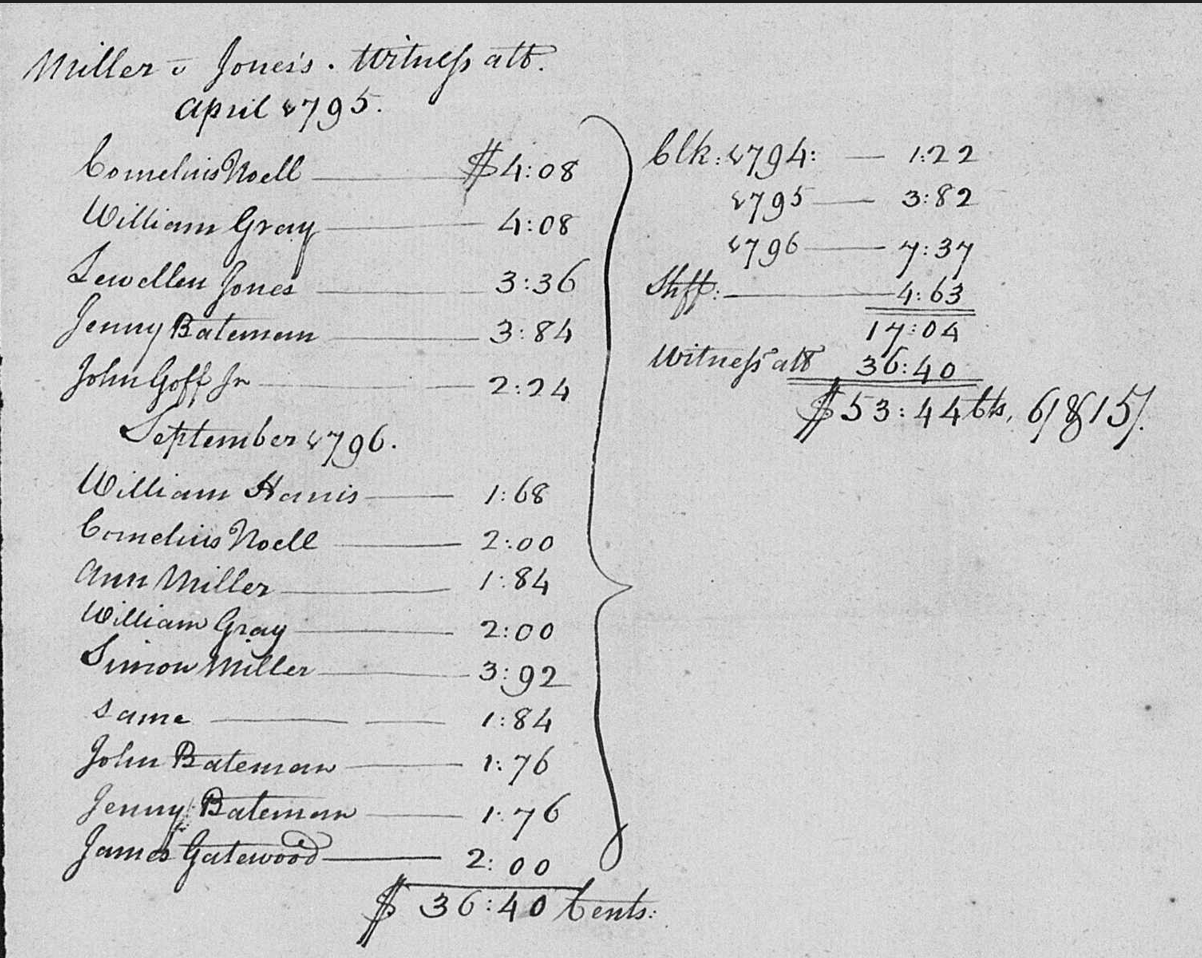
Lists of witnesses:


There was a legal dispute over the tax lists and  full tax lists were included in a file:


Interesting the time court would meet is outlined in this document. Since there wasn't good lighting available sunset ended the court day. 


The cases often involved slaves. If someone is researching slave ancestry these records do provide the names of slaves. Also there are cases involving land disputes which include land records and sometimes land surveys. 

Court records are a very important source for family history, especially in the south where vital records weren't introduced until the twentieth century.

Thursday, November 9, 2023

My Wray/Ray Family and the Disabled Slave Betty


During my August trip to Virginia I stayed in a hotel near Liberty University. On the other side of the campus there was a major street with a Target and Walmart, and restaurants. Walking through the campus to get to this area it began pouring rain one day. I decided to take shelter in the library until the rain let up. I didn't think this religiously oriented institution would have genealogy related material but thought they would at least have some Virginia history books. I was surprised to actually find a book marking the bicentennial of the county I was researching. "Franklin County, Virginia, 1786-1986 : a bicentennial history" is a book I found in that library. I had never seen it before. 

I didn't expect to find anything about the Wray family in a chapter about slavery. I've been researching that family over 20 years and never found a record of them owning any slaves. 

I was floored by the story of Moses and Elizabeth Wray and a slave girl named Betty. Evidently a man named David Morgan bought a slave girl named Betty and her father Sampson from William Lee. Moses Wray leased Betty from Morgan for $7 a year. The Wrays returned Betty to Morgan after discovering she was lame, either due to an injury or one leg being shorter than the other. 


What happened to slaves like Betty who were disabled? Someone who could not walk could sew and do tasks with their hands. Other more severely disabled people were cared for by mother's who had to be their caregivers along with performing their own work as slaves. These severely disabled slaves were kept or sold off with their caregivers. Some disabled slaves were sold to doctors who performed experiments on them, according to an article on Wikipedia.

I wanted to confirm the story in the book so I ordered a copy of the Elizabeth Ray affidavit cited in the book from The Library of Virginia archives. The case she provided the affidavit for was named Morgan v. Lee, because Morgan was suing Lee because the slaves he purchased from him turned out to be unsound. I quickly received a reply from a reference librarian after submitting my order. She said the affidavit wasn't in the box which was referred to in the book citation. 

I corresponded with the reference librarian by phone and email trying to figure out where the affidavit might have been filed? I was nearly giving up thinking it was lost. It took a month for the affidavit to be found. 


I learned that the other affidavits were a part of the chancery records online at the Virginia Memory site. I had already checked that site back when I was in Virginia. Nothing came up about this case? Why? Because the case was indexed under the variant spelling Morgain. Also the name Ray, or variant spelling Rey, actually are in the file documents online, but aren't in the index. I just found the file a few days ago. 


Two of the case affidavits involve the Rays. Elizabeth Ray and William Waid provided their recollections of Betty, and the leasing of her by the Ray family. The two affidavits don't completely agree. Apparently Waid worked on the Ray plantation for a year. According to William Waid the Ray's had Betty for some time before returning her to Morgan because of her disability. He states Morgan offered to lower the lease rate and even offered to give her to the Rays as a gift. According to him Moses said he couldn't afford to feed and clothe her if she could not work. 


According to Elizabeth Ray she immediately noticed the girl was limping as she left the wagon when she was brought over. She asked the girl to show her the wound. She did see a wound on the girl's hip. She also stated if Betty had a child she would likely become completely disabled. 


Since one page from the Morgan v. Lee case was missing from the file I'm doing a little more research on the case in Virginia determined papers at FamilySearch. Not knowing exactly when the case ended it's been difficult to find in those papers. 

Not sure what became of Betty? Sadly, someone like her wouldn't have had any good future prospects in 1794 America. The best outcome would have been that she was granted her freedom because no one wanted to buy her. 

Tuesday, October 3, 2023

Finding An Ancestor's Land On A Map/ a challenging process

When I visited Virginia and Tennessee this past July and August I wanted to visit the location of my ancestors' land. I had descriptions of the approximate location because creeks were mentioned in their deeds. Since creeks can run for many miles it's difficult to say where, exactly, their land was?

Virginia does have county historical maps that were produced by a cartographer. These maps show approximate locations of early settlers' land. They were produced by H. R. Hildebrand. My ancestor Moses Wray is listed in the Franklin County. Virginia map. I wondered what the source for these locations were? I did some research in the courthouses and didn't see any information there pinpointing land locations? I did find a description of what the sources were at the East Tennessee State University website. "Compiled from old maps, historical records, and traditions by J.R. Hildebrand." The fact some of the locations were based on traditions worried me a little. I had taken these maps more literally. I now felt like I needed to verify the approximate location, also. 


I visited a surveyor's office in Rocky Mount because I thought they might have some tips regarding locating an ancestor's land. The office had some hunting trophies (which reminded me of my grandfather Forgey who liked to keep taxidermy animals).   


The surveyor's suggestion was to trace the land ownership forward using deeds. Once the current owners information is found the exact location of the land can be found using tax records. 

I attempted to trace the land forward using deeds, but quickly lost the ownership trail. Could be later owners didn't file deeds? I wasn't sure why I was having problems? I decided to try to trace the land ownership backward instead. 

So how do you find current land ownership information? The best way is to use a parcel land viewer. There are many of these online and free to use. Franklin County, Virginia's parcel map is located at the ArcGIS Franklin County, Virginia website. 

Moses Wray owned land on Maggodee Creek and White Oak Creek in Boones Mill. White Oak Creek on Google Maps is mismarked Gills Creek. That creek runs east west whereas White Oak creek runs more north south and eventually meets the Blackwater River. 

The most accurate topo maps are on the USGS website. They have maps showing creeks going back to the 19th century right up to the present. I was thinking the name of White Oak creek changed when I didn't find it on Google Maps. That slowed my progress locating the land. 


What I know from the deeds is Moses Wray had land on Maggodee Creek and White Oak Creek. using the USGS map I found the creek. Since White Oak Creek flows into Maggodee creek  I guessed the land is in that area. 

Now I had a general location to search the parcel map at ArcGIS. My hope was actually to find someone with the surname still owning the land in the area, but I was thinking I would likely have to trace the many parcels backward. 

Clicking the first few parcels I didn't see any surnames I recognized.  To my surprise I did click on a parcel owned by someone with the surname Wray! I've decided to contact this current Wray owner and ask if he knows whether Moses Wray owned his land. They'll probably think I'm crazy but the worst that could happen is I don't get a reply. 

If you look at the blue outline of the land currently owned by a Wray it gives us an idea of how much land the family once owned. The current owner owns 86 acres. The Wrays owned hundreds of acres in this area. Their land would have covered a substantial amount of land on White Oak Creek. That creek is shorter than Maggodee Creek. 


Now that I have a better approximation of where the Wray land was, how accurate is the H. R. Hildebrand map? Since there is no scale on this map it's tough to say. Hildebrand did have Moses Wray's name written on the correct side of the highway. Comparing where the current Wray land owner owns land Moses Wray's land would have been about 3 miles east of the highway. The Hildebrand map is generally right but would give some people the false impression Moses Wray's land was closer to the highway and farther north than it likely was. 


The current Wray landowner, on White Oak creek, owns parcel 7. Two of Moses Wray's sons inherited what they called lots 4 and 5. I wonder if two other sons inherited lots 6 and 7? I have no idea whether the numbering is the same? 


Moving on to Tennessee I wasn't so lucky. I'm looking for ancestor Hugh Forgey's land. Unfortunately the Forgey family didn't stay in the Corryton, Knox County, Tennessee area. Since Hugh Forgey's land was described as being at the head of Little Flat Creek I have a general idea of where the land was located. I tried to again trace parcels backward and forward to get the exact location of the land. The Forgey land was probably broken up into smaller parcels, and I haven't been able to establish the exact location of the land. Hugh Forgey owned 300 acres of land. The current owners in the area own much smaller parcels of land. The map outline, below, shows 7 acres. Hugh Forgey's land would have covered a large portion of the Little Flat Creek area. 


The online parcel maps showing current landowners has been helpful when it comes to finding the names of current landowners, and viewing  how the land has been broken up into smaller parcels. Great tool for genealogists! 


Wednesday, September 20, 2023

Research Trip Serendipity


I took a trip to the Virginia Piedmont area and East Tennessee in August. My Wray and McPike ancestors were from the Piedmont area of Virginia. I started my journey in Lynchburg where I visited the Jones Memorial Library which is a genealogy library.

Traveling around Lynchburg was easy. The city has a bus system, it’s pretty limited but cheaper than renting a car or using Uber or Lyft.


From Lynchburg I moved onto Franklin County, Virginia. I took a Greyhound bus from Lynchburg to Roanoke (I found out train service was also available and I probably should have taken the train). Roanoke being a city it was easy to get a Lyft to my hotel in Franklin County. 

I arrived in Rocky Mount on a Saturday. I was told by the front desk person at my hotel that there was no public transportation, Uber or Lyft. The one car rental agency was closed until Monday. I wanted to travel about 12 miles to Boones Mill where some of my ancestors lived. I decided to try to schedule a Lyft for Sunday morning.

A Lyft driver did pickup the ride. I believe they picked it up because the wrong pickup location was given to them. I received a message that the driver had arrived, but didn’t see him? I called to ask where his car was. We then discovered he was about 20 minutes away from me. He agreed to pick me up anyway. If he knew I was farther away he probably wouldn’t have picked me up.

Talking to him on the way to Boones Mill we discovered we had a mutual interest in visiting cemeteries. He agreed to take me to cemeteries, and other places of interest, if I paid cash for his gas.


I had worried about getting back from Boones Mills. He agreed to come back and pick me up later. If he hadn’t picked me up I would have called a taxi in Roanoke, and it would have cost a fortune and there would be no guarantee they would pick me up.


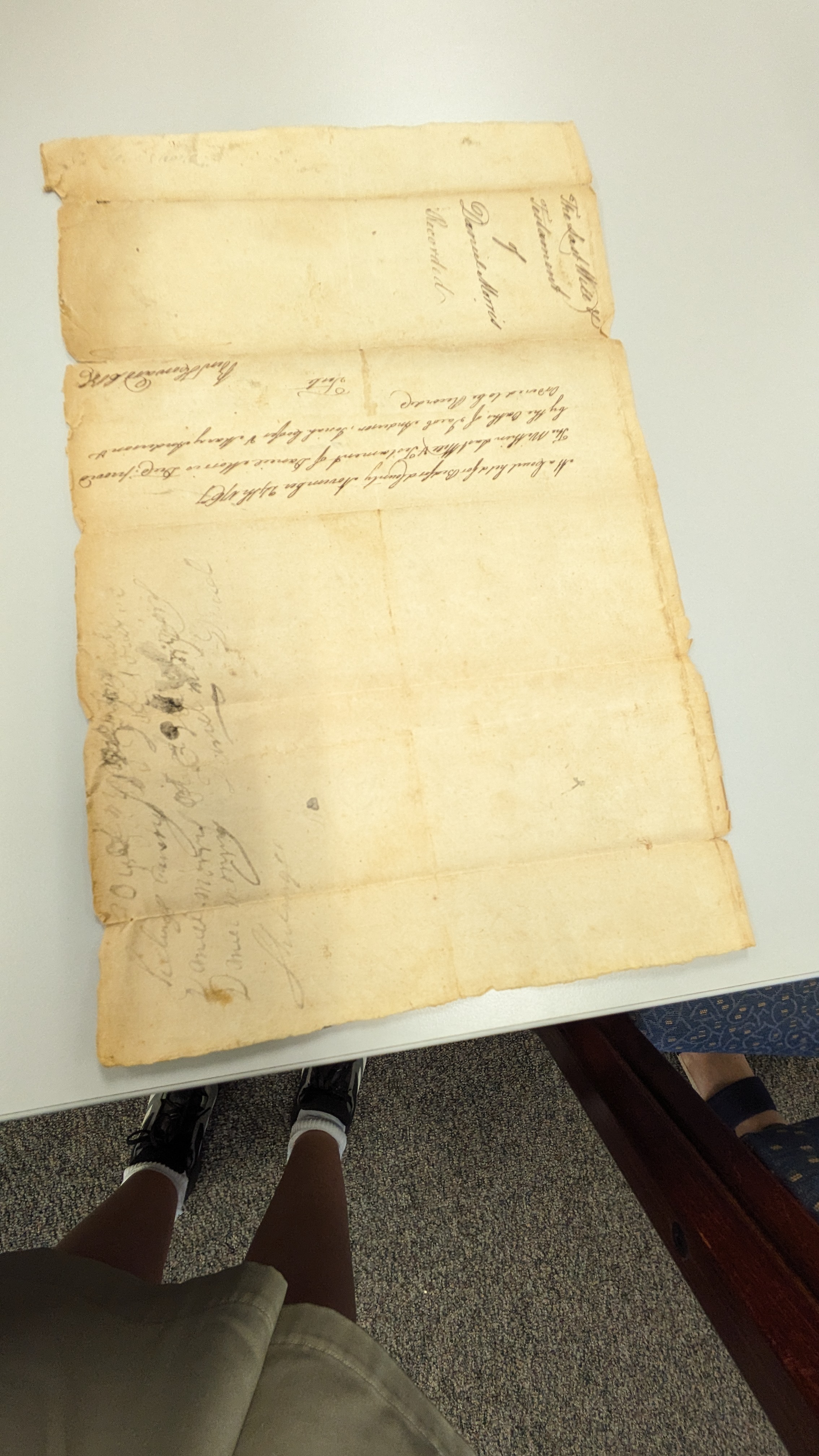
Since the driver knew the area I saw more of the area than I would have on my own. He has family living in Boones Mills. I didn’t lose any precious time waiting to rent a car and didn’t get stranded somewhere without the ability to get back. When I was in Lynchburg I visited Poplar Forest, but couldn’t visit the town of Bedford without a car. I wanted to do some research there. The Lyft driver took me to Bedford where I was able to see and hold an ancestor's 1767 will.


I also met a friend of the Lyft driver who is distantly related to me. She knew quite a bit about our shared Wray family. 

When I went on to Knoxville, Tennessee I was able to get around easily using buses, and walking. I decided to visit the rural area where my Forgey family came from one day. Like Roanoke it was easy to get a Lyft to the Corryton area. I worried a little about getting back. I again figured I could call a taxi if worse came to worse.

It seemed the easiest to set my ride destination as the Nicholas Gibbs log house. I had been wanting to take a closer look at that house after reading about an archaeological dig there. Also my ancestor Hugh Forgey was acquainted with Nicholas Gibbs because Gibbs posted a bond for Hugh. The Lyft driver had difficulty finding the log house. We did finally find it. The house is operated by the local historical society. I was just going to look in the windows, and then walk around the area where I believe my family’s land was.

There were phone numbers on one of the windows. I decided to call and ask if it would be possible to go inside the house? By chance one of the volunteers was in the area and came right over and showed me around.


As I did everywhere I went I asked if the volunteer knew anything about the Forgey family? He said absolutely. He found a trunk full of papers in an old house in the area and there were a few documents with the surname Forgey. He told me most of the papers were now at the Calvin M. McClung Genealogy Library in Knoxville. I had been there several times and didn't know about that special collection. I planned on returning to that library later in the day.

The volunteer, Mr. Longmire, was very nice. He offered to take me around in his truck and show me the area where my ancestors lived. Again I lucked out. It was very hot and humid and would have been difficult for me to walk very far. Actually the area where my family's land was turned out to be farther from the Gibbs house than I thought. It was about 3 miles away. He also took me to the Sawyers house where the many of the papers found in the trunk were originally stored. They were actually moved to the McBee house, which he also showed. A Sawyer's daughter married a McBee. These families were related to the Forgey family by marriage.


Mr. Longmire also showed me his collection of genealogy material at his house. I also met his wife, and dog. He left me off at a Target where I was able to get a Lyft back to Knoxville, that was ideal. I couldn't believe my luck meeting up with him!

I spent 2 days going through the McBee/Sawyers papers at the Calvin M. McClung collection. There were documents naming Forgeys, and Civil War letters that were fascinating.


In hindsight, not renting a car for this journey turned out to be a blessing in disguise. The challenges I faced led to unexpected encounters, deeper insights, and a richer understanding of my ancestral roots. My trip reinforced the notion that on a research trip, the more people you engage with, the more you are likely to learn.


I also attended the all day History Hootenanny during my trip, which included historic home tours